


Testing of Indian Snacks and Savouries under the regulatory framework of the Food Safety and Standards Authority of India (FSSAI) is categorized under Food Product Category (FPC) 18.0: Prepared Foods, specifically falling under sub-category 18.2: Indian Snacks, Savouries, and Fried Products(including namkeens, bhujia, mathri, samosa, kachori, pakodas, and extruded fried snacks). Given these diverse analytical matrices, ranging from uniform fried doughs to multi-component formulations with moisture-dense inner fillings or external spice coatings, these products present complex physical, chemical, nutritional, and microbiological testing challenges.
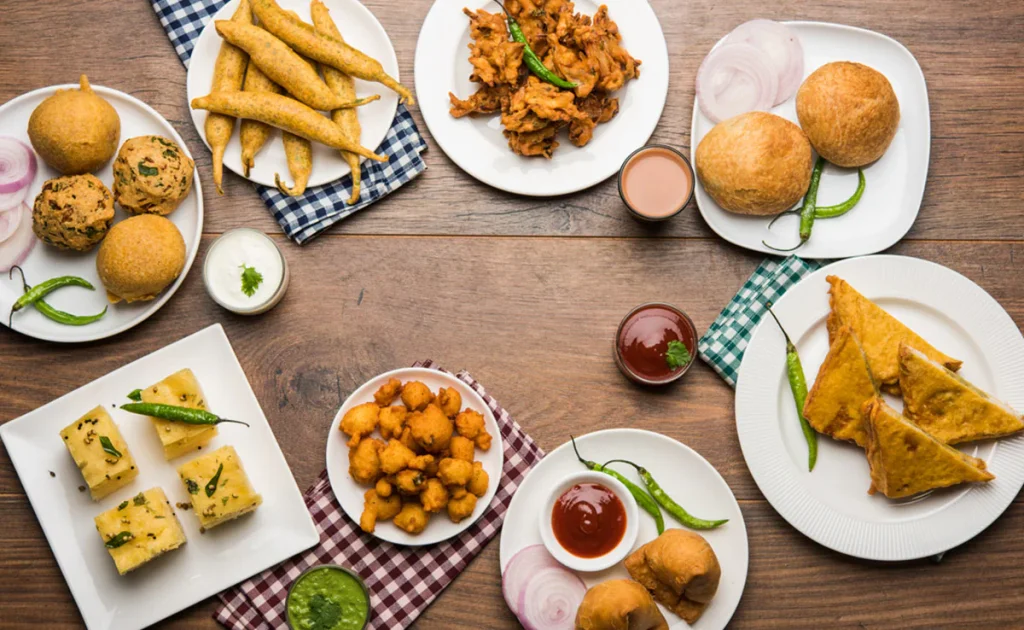
The structural integrity and safety profile of traditional Indian snacks depend on systematic testing across the following three primary phases:
1. Raw Materials (Flours/Maida/Besan, Pulses, Spices, Condiments)
2. Transformation Medium (Frying Oil)
3. Finished Composite Product (Extruded, Filled, or Coated)
To ensure comprehensive statutory compliance, testing protocols must evaluate the incoming raw ingredients, the degradation of the thermal processing medium, and the final finished product. FSSAI mandates strict compliance across critical analytical categories to ensure consumer safety and product authenticity.
1. Testing of Raw Materials
| Parameter | Regulatory Maximum Limit | Technical Purpose / Analytical Focus |
| Moisture Content | Max 40.0% (Filled snacks) Max 5.0% (Dry namkeens/bhujia) |
Controls water activity (aw) to limit microbial proliferation or prevent rapid rancidity. |
| Acid Insoluble Ash | Max 0.1% by mass | Evaluates the purity of raw flours and spices; isolates the presence of mineral matter, sand, or dirt dust. |
| Peroxide Value (PV) | Max 10 meq/kg of extracted fat | Measures primary lipid oxidation products within the snack’s fat matrix. |
2. Testing of Frying Medium Degradation (Oil Quality)
Because the majority of products in this category undergo deep-frying or flash-frying, the frying medium must be continuously monitored:
- Total Polar Compounds (TPC): Maximum 25%. Accumulation of TPC beyond this threshold denotes severe thermal degradation, rendering the oil toxic and illegal for further use.
- Acid Value: Maximum 1.0 mg KOH/g of oil. Monitors secondary hydrolytic rancidity driven by moisture transfer from raw doughs or fillings into the hot oil.
- Adulteration Indicators: Must be negative for prohibited oils, specifically Argemone oil and Hydrocyanic acid, to avoid severe neurotoxic contamination risks.
3. Testing of Finished composite [finished] product
A. Testing of Additives, Colorants & Contaminants
| Parameter Category | Target Analyte | Regulatory Maximum Limit |
| Industrial Trans Fats | Trans Fatty Acids | Max 2% by weight of total fat present in the product. |
| Heavy Metal Contamination | Lead (Pb) Arsenic (As) |
Max 2.5 ppm Max 1.1 ppm |
| Synthetic Colorants | Non-Permitted Food Colors | Strictly Absent (Zero Tolerance for Metanil Yellow, Sudan dyes, or Rhodamine B). |
B. Microbiological Pathogen Profile
Microbial limits ensure the safety of ready-to-eat (RTE) savouries. Sampling must follow the standard protocols outlined for heat-treated processed foods:
- Salmonella species: Absent per 25 grams (Critical biological hazard control).
- Escherichia coli (E. coli): Absent per gram (Indicator of process hygiene, sanitation, and water quality).
- Staphylococcus aureus (Coagulase Positive): Max 1 × 10² CFU/g (Evaluates cross-contamination by food handlers).
Further, under the Food Safety and Standards (Labelling and Display) Regulations, FSSAI mandates that all pre-packaged or commercially registered traditional snacks undergo precise quantitative nutritional profiling. For non-packaged counter sales (such as halwai shops), FSSAI norms require clear voluntary declarations or menu-labelling metrics if the establishment meets specific central licensing thresholds.
Mandatory Nutritional Parameters & Analytical Methodologies
Nutritional evaluation must be performed via validated laboratory testing due to variables like oil absorption and seasoning density. The finished composite product must be evaluated using the following certified reference methods:
- Energy Value (kcal / 100g): Determined via Bomb Calorimetry or by mathematical summation of tested proteins, carbohydrates, and fats.
- Total Carbohydrates & Sugars (g / 100g): Measured using the Difference Method or High-Performance Liquid Chromatography (HPLC) to isolate naturally occurring or added sugars.
- Protein (g / 100g): Tested via the Kjeldahl Method (using a nitrogen-to-protein factor of 6.25) to evaluate the protein content from pulses, lentils, or gram flour (besan).
- Total Fat (g / 100g): Quantified using the Soxhlet Extraction System to measure total lipids absorbed during deep-frying plus shortening added to the initial dough.
- Saturated Fatty Acids (SFA) & Trans Fatty Acids (TFA) (g / 100g): Isolated and measured using a Gas Chromatography-Flame Ionization Detector (GC-FID).
- Sodium (mg / 100g): Quantified using Inductively Coupled Plasma Mass Spectrometry (ICP-MS) or Flame Photometry to track salt content in the seasoning mix.
CONCLUSION
Indian Snacks and Savories are an important occasional indulgence as part of the Indian diet. It is important to understand what we consume is safe or otherwise. Anacon Laboratories boasts of an immense expertise in analysis of Indian Snacks and Savories, among many other complex food-based sample matrices. Get in touch with us today to get your Snacks and Savories tested.