


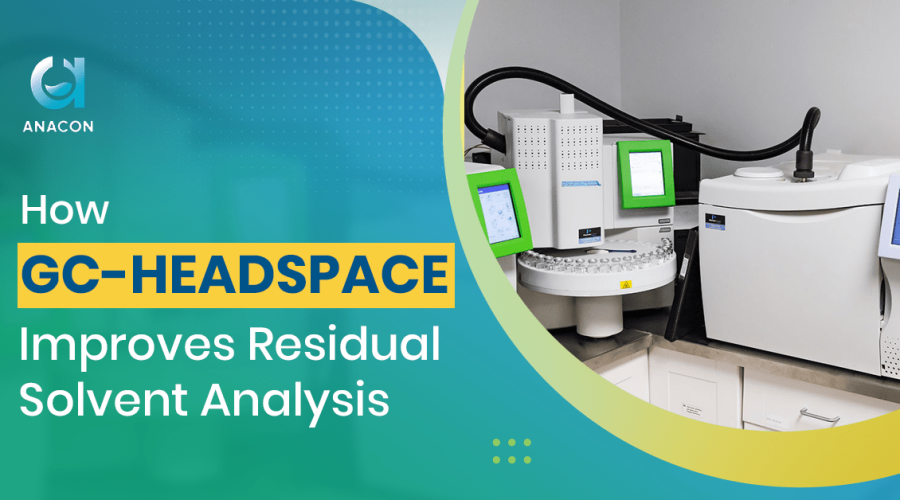
How GC-Headspace Improves Residual Solvent Analysis
Have you ever wondered why many quality-control labs prefer residual solvent testing with headspace gas chromatography instead of traditional direct injection? If you work in pharmaceuticals, chemicals, or specialized manufacturing, you’ve probably seen how strict pharmaceutical residual solvents guidelines have become over the years. By the end of this article, you’ll understand exactly how GC-Headspace strengthens accuracy, speeds up decision-making, and brings measurable advantages that often go unnoticed.
Across Indian labs, GC-Headspace has quietly become the dependable choice for routine solvent monitoring. Unlike direct injection, which forces the entire sample—including non-volatile components—into the system, headspace sampling focuses only on the vapors above the sample. This shift might seem small, but it dramatically improves sensitivity, keeps instruments cleaner, and helps labs stay aligned with evolving global regulatory expectations.

Why GC-Headspace Delivers Clearer, More Consistent Results
GC-Headspace separates the sample from the instrument in a very clean way: only volatile solvents travel into the column, while the heavier matrix components remain behind. This simple physics gives labs several performance benefits that make a real difference on the shop floor.
One of the most consistent advantages is sensitivity. Many validated headspace methods in India routinely reach detection levels in the double-digit ppm range using sample amounts as low as 80–120 mg. In practical terms, this means labs can confidently measure solvents even when process residues are extremely small.
Another major gain is precision. Because each vial is sealed and heated under controlled conditions, injections are uniform across the entire batch. It’s common for headspace methods to produce relative standard deviations under 5%, which is ideal for regulated testing. In fast-paced production cycles, this level of precision reduces re-testing, avoids repeat investigations, and cuts down on unnecessary manufacturing hold times.
Finally, GC-Headspace drastically reduces instrument wear. Since non-volatile compounds never reach the inlet or column, the system stays cleaner for longer. Labs often report longer column life and fewer maintenance interruptions, which directly improves turnaround time.
How does GC-Headspace help in the analysis of food for residual organic contaminants?
The challenges faced by food manufacturers are different from those related to pharmaceutical labs. Apart from quality, there is a constant pressure on maintaining safety and shelf stability. This is where GC-Headspace quietly becomes a very dependable tool. It helps in the identification of minute amounts of volatile organic contaminants without disturbing the main food matrix.
Most of the food samples-whether oils, spices, grains, ready-to-eat snacks, or beverages-contain natural fats, sugars, and proteins. If these components enter the GC system through direct injection, they tend to char, deposit on the inlet, and slowly affect sensitivity. Headspace sampling avoids all this. Because only the vapors are analyzed, the instrument stays clean and the results are consistent, even when samples are complex.
GC-Headspace is particularly useful in day-to-day food testing for:
- Finding remaining solvents or packaging migrants from printed pouches, laminates, or adhesives.
- Other breakdown products which can be generated during frying or thermal processing, such as aldehydes and ketones.
- Flavor changes can be checked by monitoring volatiles influencing freshness and aroma.
- Meet the national and export regulations for FSSAI and various international limits.
Since every sample vial is sealed, heated, and processed under controlled conditions, the technique delivers repeatable results, something food plants rely on when it comes to batch approval or shelf-life evaluations. This reduces instrument downtime and keeps routine testing smooth and predictable.
With more Indian labs building capacity for high-volume food analysis, GC-Headspace has steadily become the preferred method to ensure safety, maintain quality, and catch those little contaminants that would otherwise go unnoticed.
What Experienced Teams in India Know (But Rarely Mention)
Technicians and method developers who work with GC-Headspace every day have a few practical insights that make the technique even more powerful:
- Sample mass is everything. Starting with around 100 mg of material gives a balanced response for a wide range of solvents.
- Detector choice matters. FID remains a cost-effective workhorse for quantification, while MS is the preferred tool for confirming unknown peaks or resolving complex formulations.
- Self-validation is becoming normal. As more contract manufacturers handle diverse chemistries, labs increasingly build hybrid methods that extend beyond the standard solvent lists. This helps reduce regulatory queries during audits and dossier reviews.
- Compendial alignment is expected. Indian QC teams routinely tailor the method to match ICH and USP expectations without compromising sample throughput.
This combination of flexibility and robustness has made GC-Headspace one of the most trusted analytical setups in India’s pharma ecosystem.

Indian Labs Are Rapidly Adopting High-Throughput GC-Headspace
Many accredited labs in India now operate automated GC-Headspace systems capable of running large sample batches throughout the day. Autosamplers heat, equilibrate, and inject samples with minimal manual handling, which enhances traceability and reduces error rates.
For companies involved in exports, choosing a partner lab that follows globally accepted methodology is essential. Indian facilities with ISO/IEC 17025 accreditation offer structured documentation, method validation support, and the consistency needed for regulatory filings across multiple regions.
GC-Headspace has become one of the most reliable tools for measuring volatile residues because it offers clarity, precision, and long-term stability without adding extra complexity. Whether you’re setting up a new method, updating an existing workflow, or outsourcing your testing, GC-Headspace gives you a level of confidence that older approaches simply can’t match.
To explore accurate and compliant residual solvent analysis for your products, reach out to Anacon Laboratories your trusted partner for reliable testing solutions.


